A bulk material handling line is not a collection of parts; it is a route that material travels from loading to discharge, and sometimes on to a stockpile, and every part on that route has to suit the material, the route and the duty. The company website describes its line in one sentence: it manufactures a complete line of bulk material handling equipment, including idlers, pulleys, belt conveyors, stackers and other conveyor parts. This guide shows how those five families fit together, how the system types named on the company website relate to them, and what a buyer should put in an inquiry so the whole line can be checked as one system rather than as five separate purchases.
The five families and where each one sits
The five families divide the line by position. Idlers support and guide the belt along the carrying and return strands, and the idler guide explains carrying, troughing, return, impact and self-aligning types. Pulleys turn the belt at the discharge end, the tail end, bends and tensioning points, and the pulley guide explains head, deflection, lagging, wing, snub, take-up and bend types. Belt conveyors are the routes themselves: mining, coal, tunnel, hooded and long-distance pipe systems that carry material along a defined path. Stackers build stockpiles where the route ends in a yard, and the stacker guide explains tracked, radial, telescopic and portable types. Conveyor parts complete the line: belt cleaners, impact beds, hood covers and stringer frames that clean, cushion, protect and support the belt. A buyer who can place each family on the route is already halfway to a good brief, because the brief then follows the route from loading to discharge instead of jumping between unrelated parts.
The company profile states it was established in 1994. That attributed statement, the company address, phone and email, and the generic certificate wording appear on the company pages of this site, and they are the company facts a buyer needs before enquiring. Beyond those facts, the selection questions are all about the job: what material moves, along what route, under what duty, and in what environment. A line that answers those four questions clearly can be checked; a line that names parts without describing the job cannot.
System types named on the company website
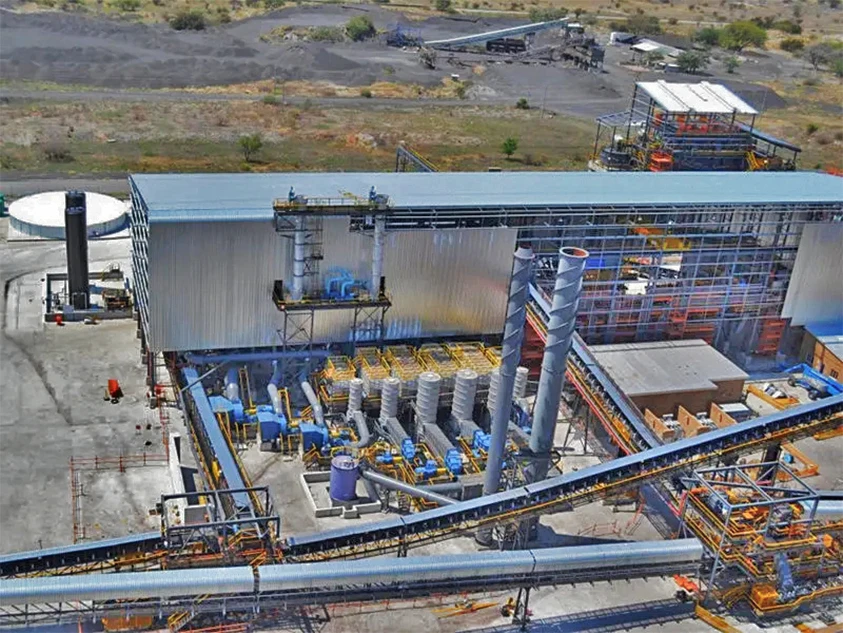
The company website names four system types in its solution captions, and each one illustrates a different job for the same five families. The iron ore blending yard conveying system for steel and sintering plants shows a yard job: material is blended and stockpiled before it enters the plant, which calls for stackers, blending arrangements and the conveyors that feed them. The continuous muck removal belt conveyor system for highway mountain tunnels shows a tunnelling job: material must leave the working face continuously as the bore advances, which calls for extensible tunnel conveyors and the idlers, pulleys and cleaners that keep them running. The port long-distance pipe belt conveyor system shows a route job: material travels a long distance to or from a port, enclosed against spillage and weather, which calls for pipe conveyors and their loading and discharge arrangements. The coal fuel handling system for coal-fired power plants shows a fuel job: coal travels from delivery to the plant, which calls for coal conveyors, transfer points and the fire and dust arrangements that coal handling requires. Each system type is a pattern, not a product, and a buyer whose job matches a pattern can use it as a starting point for the brief.
Selecting by material, route and duty
Selection starts with the material. What is it, how does it behave, and how is it loaded and discharged? Fine, dusty material needs containment and cleaning; lumpy, abrasive material needs cushioning and wear resistance; wet, sticky material needs cleaning that can cope with residue. The route comes next: how long is it, does it climb or descend, does it bend, does it run indoors, outdoors or underground, and where are the transfer points? The duty follows: does the line run continuously or intermittently, does it stop and start often, and what happens when it stops? The environment closes the brief: dust, moisture, temperature swings, weather and access for maintenance all shape the right arrangement. A selection that weighs material, route, duty and environment together will usually point to one family combination rather than another, and the supplier can confirm or correct that combination when the brief is complete.
Two common selection mistakes are worth naming. The first is selecting by part name alone, without describing the job: two lines can use the same idler or pulley name and need entirely different arrangements because their materials and routes differ. The second is selecting each family separately, from different briefs, so the parts do not match at the transfer points where they meet. Both mistakes are avoided by briefing the whole line in one inquiry, with the route described from loading to discharge and the material described at each stage.
Questions to put in a system inquiry
Please confirm the minimum order quantity with the supplier before placing an order. Please confirm the lead time with the supplier before placing an order. Certificates available upon request. The questions below belong in an inquiry, and the answers should come from the supplier for the specific system, not from this guide. Describe the material, the route, the loading and discharge points, the stockpile or plant destination, and the duty the line must sustain. Say whether the route runs indoors, outdoors or underground, whether it includes a yard, a tunnel or a port leg, and whether any part of the line already exists. Ask the supplier to confirm which combination of idlers, pulleys, belt conveyors, stackers and parts suits that system, how transfer points are arranged, what cleaning, cushioning, covering and tensioning arrangements are offered, and what spares and wearing parts to hold. When a certificate matters for the project, name it in the inquiry and ask the supplier to confirm its scope and validity before ordering.
Writing a brief the supplier can actually check
A good system brief reads like a route description, not a shopping list. Start at the loading point and walk the route in words: where material arrives, how it is fed, which conveyors carry it, where it transfers, where it is cleaned or cushioned, and where it leaves the line, whether at a plant, a stockpile or a vessel. Add the material at each stage, because material can change along the route as it is blended, screened or dried, and a part that suits the material at loading may not suit it at discharge. Add the environment at each stage as well, since a route that starts underground and ends outdoors crosses very different conditions, and the covers, cleaners and supports must suit each section rather than the average of the whole route. A brief written this way lets the supplier check the line section by section, spot the places where two families meet awkwardly, and propose a combination that works as a system. It also gives the buyer a record to compare quotations against, because every supplier is answering the same route description rather than a different interpretation of it.
Related reading on this site
Each family guide fills in one part of the system brief. The guide to conveyor idler types covers the rollers that support the belt. The guide to conveyor pulley types covers the turning points. The guide to belt conveyors for mining and tunnelling covers the routes themselves. The guide to stacker conveyor stockpiling covers the yard end of the line. The guide to belt cleaners and impact beds covers cleaning and cushioning. The inquiry page is where the whole brief goes.